Product Marketing & Organizational Alignment
Creating Coherence Across a Complex Product Portfolio
Establishing shared digital messaging standards that connect product positioning, buyer understanding, and search visibility across independently operating teams.
- 44 messaging initiatives
- 19 business unit and brand categories
- 34 complete and AEO-approvedAt the reviewed project snapshot

At a glance
- Organization
- OPSWAT
- My role
- Program creator and cross-functional strategy owner
- Scope
- 37-product portfolio
- Program
- 44 messaging initiatives across 19 business unit and brand categories
- Implementation status
- Established program; ongoing adoption
Executive summary
A large product portfolio creates more than a content management challenge.
When different teams describe their products using inconsistent terminology, positioning, and structures, the cumulative effect can make the portfolio harder for buyers to understand and discovery systems to interpret.
I developed a cross-functional digital messaging program designed to establish greater consistency while preserving the unique value of individual products.
The strategic problem
Product teams are responsible for communicating complex capabilities, often within different markets and technical contexts.
Without shared digital standards, messaging may reflect internal product terminology rather than recognizable buyer problems, established categories, and market language.
The challenge was to create a scalable structure without removing product-specific nuance or displacing product marketing ownership.
The Brand–Product–Topic framework
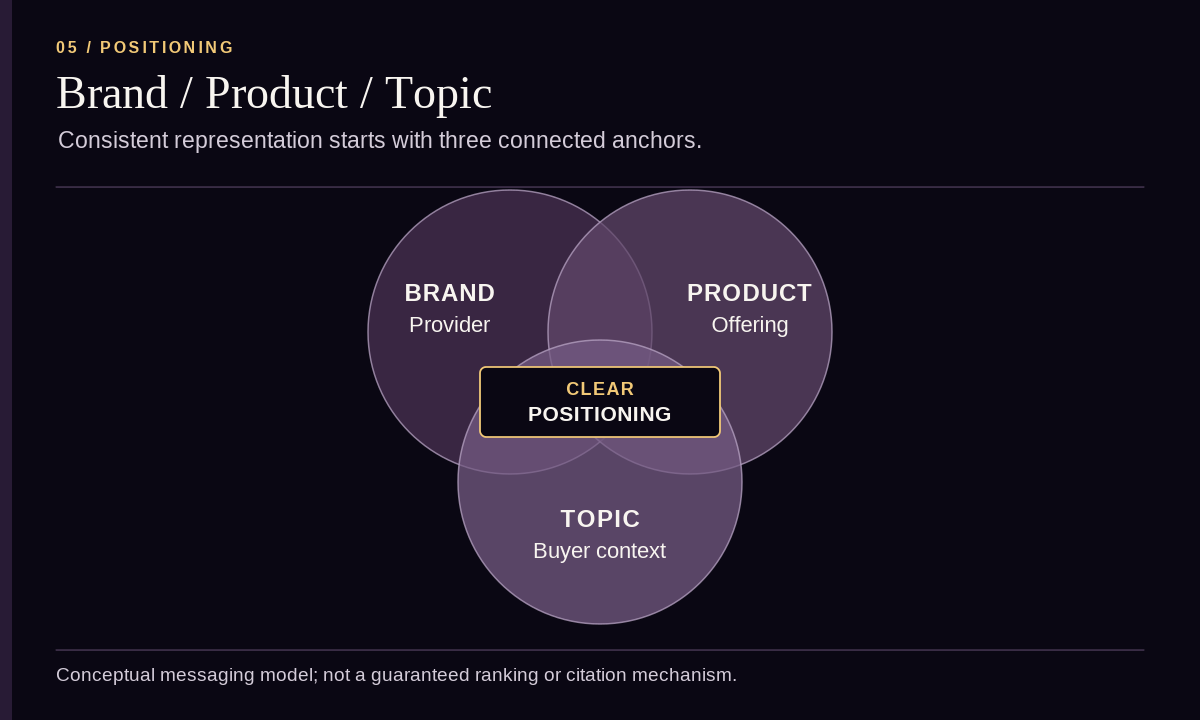
I developed a messaging framework connecting three essential elements:
- Brand: The organization associated with the solution.
- Product: The specific offering being positioned.
- Topic: The recognizable problem, category, or capability through which prospective buyers discover the solution.
The framework establishes a consistent foundation for product descriptions, digital positioning, content, and search representation.
Establishing a scalable process
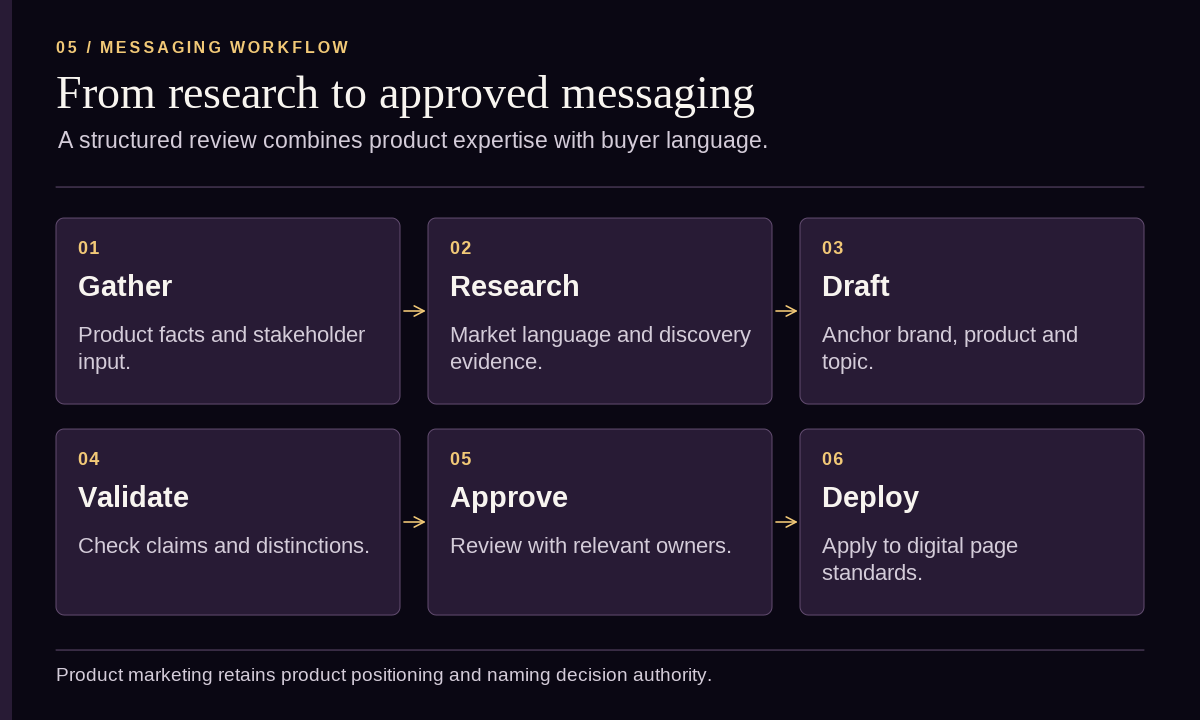
I created a standardized messaging review process that incorporated product stakeholder input, market research, search intelligence, competitive analysis, terminology alignment, and factual accuracy checks.
Approved descriptions informed digital page templates and associated messaging requirements.
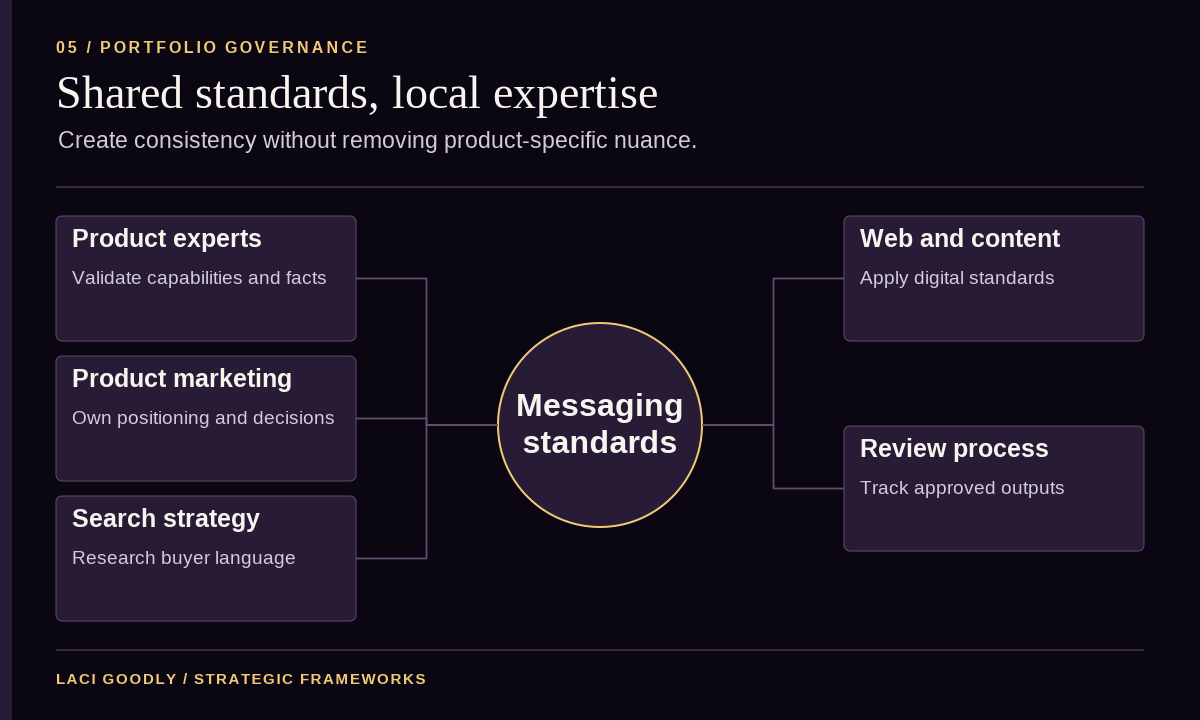
Search research also became an input into selected naming and positioning decisions.
These were advisory contributions to Product and Product Marketing decisions rather than unilateral ownership of product naming.
Program outcomes
- 44 messaging initiatives
- 19 business unit and brand categories
- 34 complete and AEO-approvedAt the reviewed project snapshot
The messaging initiative expanded to 44 work items across 19 business unit and brand categories.
At the reviewed project snapshot, 34 initiatives were complete and AEO-approved.
The program established a repeatable way to align product expertise, digital representation, and search-informed buyer understanding.
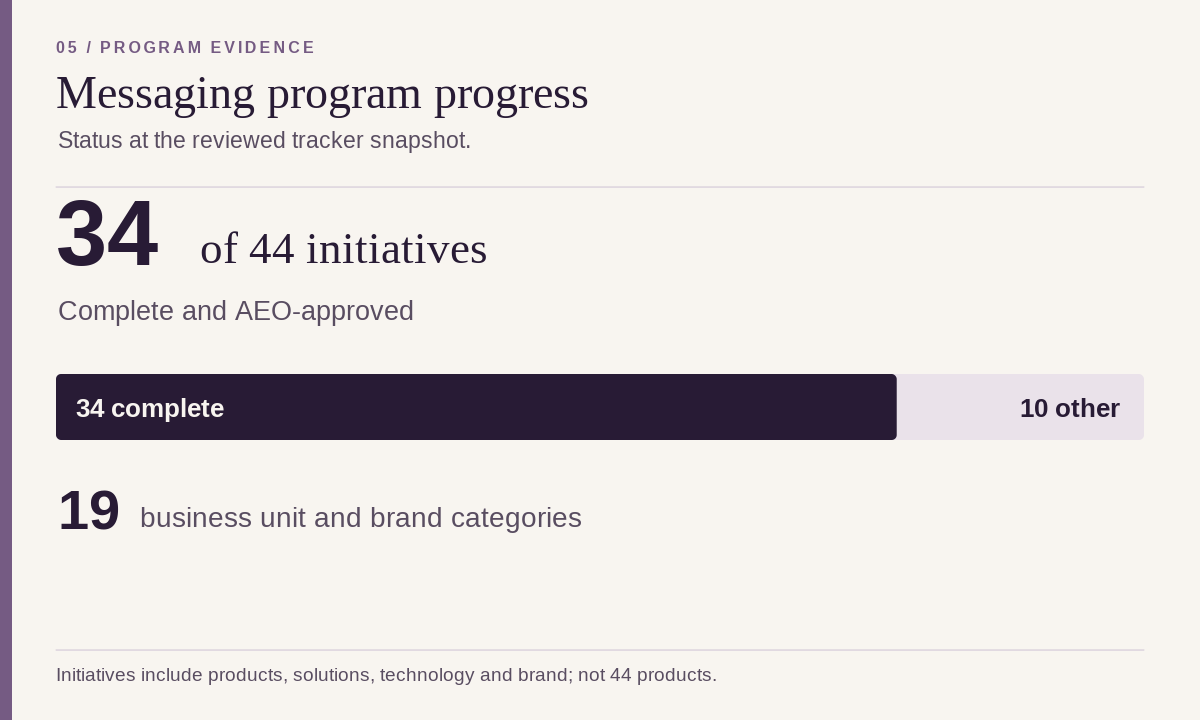
Chart data
| Group | Value |
|---|---|
| Complete and AEO-approved | 34 |
| Other | 10 |
| Total initiatives | 44 |
| Business unit and brand categories | 19 |
Strategic takeaways
Portfolio coherence cannot be achieved through website design alone.
It requires alignment between product positioning, buyer language, digital architecture, and the systems through which people discover solutions.
The thinking behind the work

Positioning
Brand–Product–Topic Framework
A positioning model connecting organizational identity, product value, and recognizable buyer topics to support consistent digital discovery.
Read the framework

Next case study
Web strategy
Architecting a Complex Digital Ecosystem
Making architecture decisions through a business-wide lens.