Search Innovation
Building for the Next Era of Discovery
Developing and scaling an enterprise AI search capability by connecting buyer behavior, machine interpretation, product positioning, research, and measurement.
- 500+ prompts
- Eight AI engines
- 16 markets

At a glance
- Organization
- OPSWAT
- My role
- AI search strategy owner and program architect
- Scope
- Multi-product, global discovery strategy
- Measurement
- 500+ prompts, eight AI engines, 16 markets
- Implementation status
- Established program; ongoing development
- Relevant competencies
- AEO, GEO, SEO, AI innovation, research, product positioning, strategic foresight
Executive summary
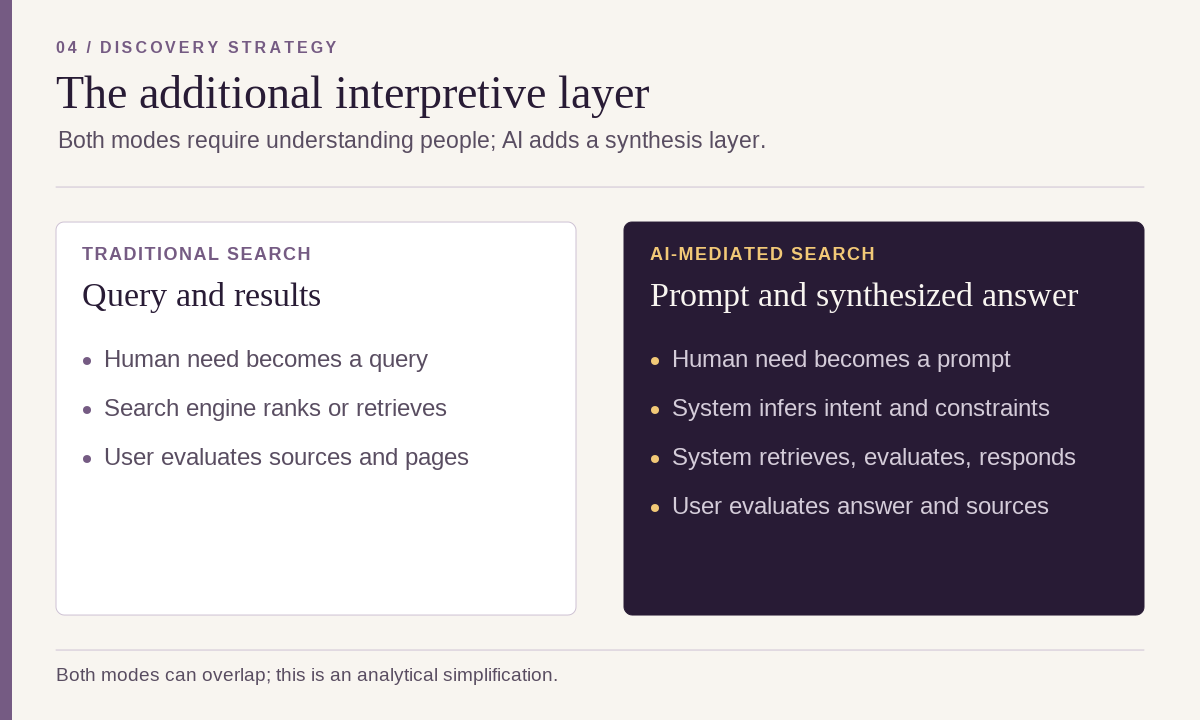
AI-mediated discovery introduces an additional layer between human motivation and the information a buyer receives.
Traditional search strategy requires understanding what people want to discover and how search engines organize information. AI search also requires understanding how AI systems interpret buyer needs, retrieve information, synthesize evidence, and generate recommendations.
I developed an enterprise strategy to address this evolving discovery environment.
Recognizing the market shift
Rather than treating answer engine optimization as a collection of emerging technical tactics, I approached it as a strategic change in how buyers discover and evaluate solutions.
The challenge was to understand the new discovery mechanisms and translate that understanding into actionable organizational practices.
Validating the opportunity
I piloted the approach with a focused product category: data diodes.
The pilot provided an environment for exploring buyer prompts, competitive positioning, AI-generated answers, source visibility, and product representation.
It also created a mechanism for communicating the opportunity to product stakeholders using evidence rather than abstract predictions about AI.
The pilot informed a broader strategy that could be adapted across the product portfolio.
Building the research system
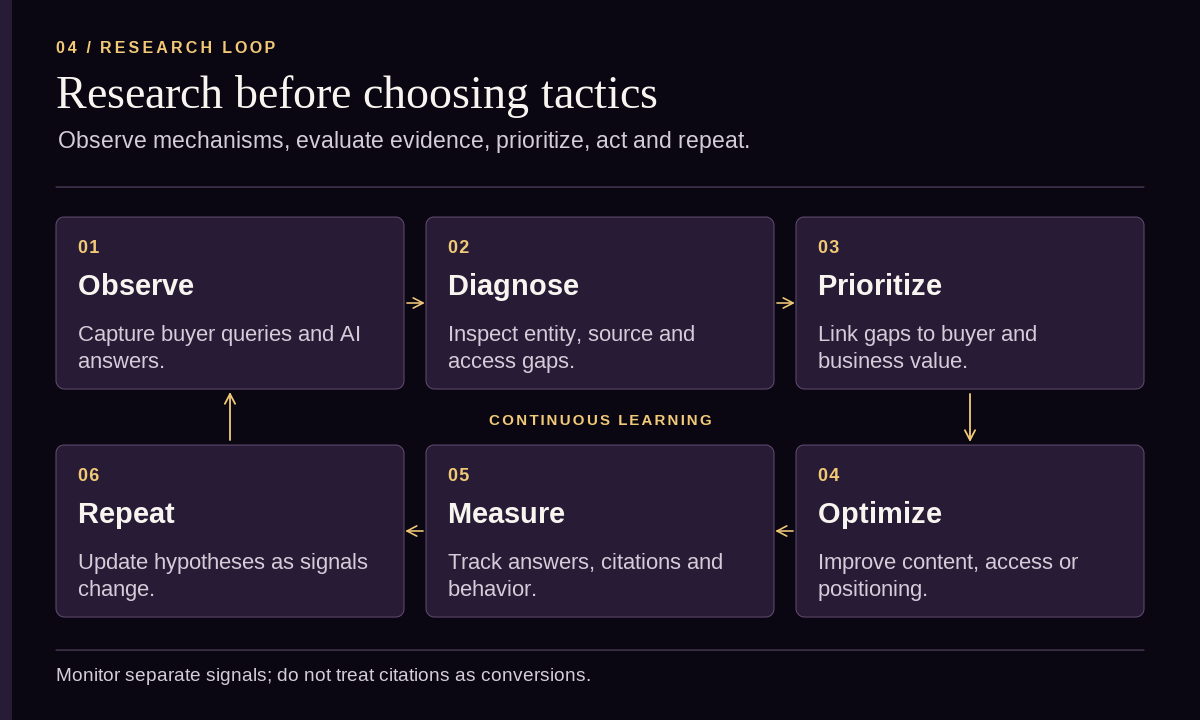
The program evolved around several interconnected research loops:
- Human motivation and buyer intent
- Prompt and query behavior
- AI answer and recommendation patterns
- Competitive representation
- Source visibility and citation patterns
- Technical accessibility
- Product positioning and entity consistency
- Referral and conversion measurement
The purpose of these research loops was to inform strategy and select appropriate interventions, not simply produce visibility reports.
Operationalizing the strategy
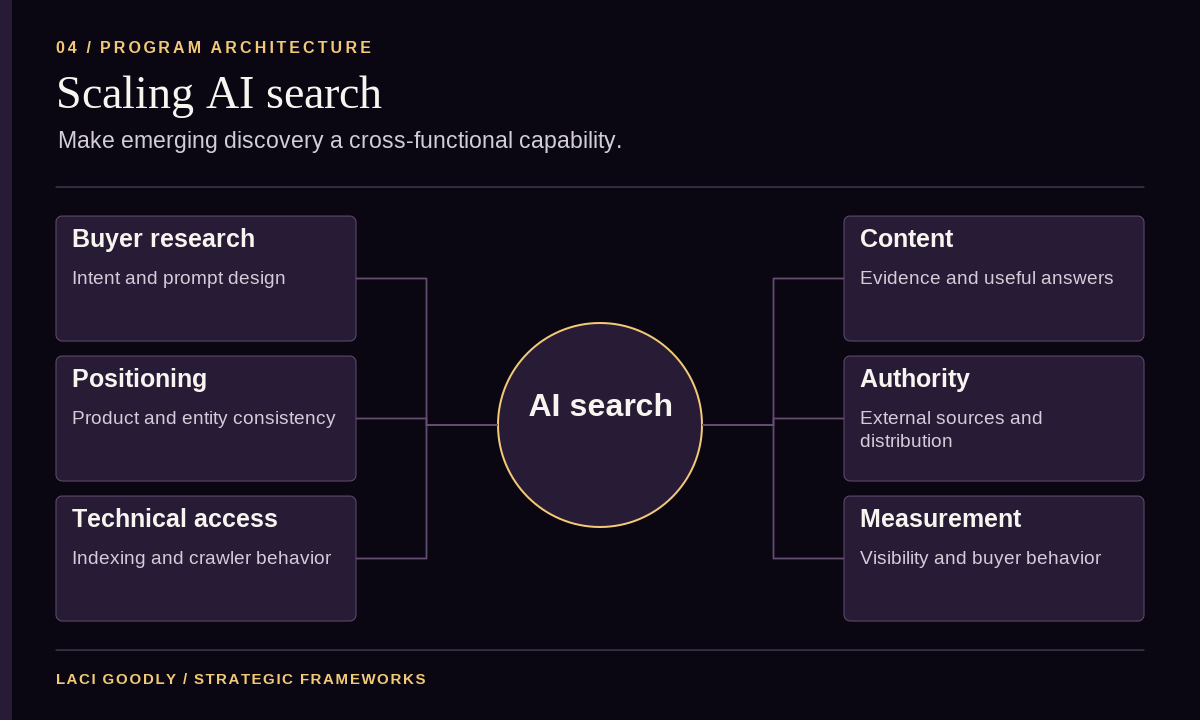
Scaling AI search required connecting multiple marketing and technical disciplines.
I developed product messaging standards, search-informed content processes, prompt monitoring, technical optimization requirements, and AI-enabled research workflows.
The program expanded to monitoring more than 500 prompts across eight AI engines and 16 markets.
It also informed broader organizational conversations about product positioning, digital architecture, brand representation, and content strategy.
Outcomes
AI search became an established capability within the digital growth function.
SEO and AI search subsequently became CEO-mandated objectives across Product and Marketing.
Monthly AI-referred contacts increased from three in June 2026 to ten in October 2026.
These early commercial indicators were encouraging but remain limited by relatively small absolute referral and conversion volumes.
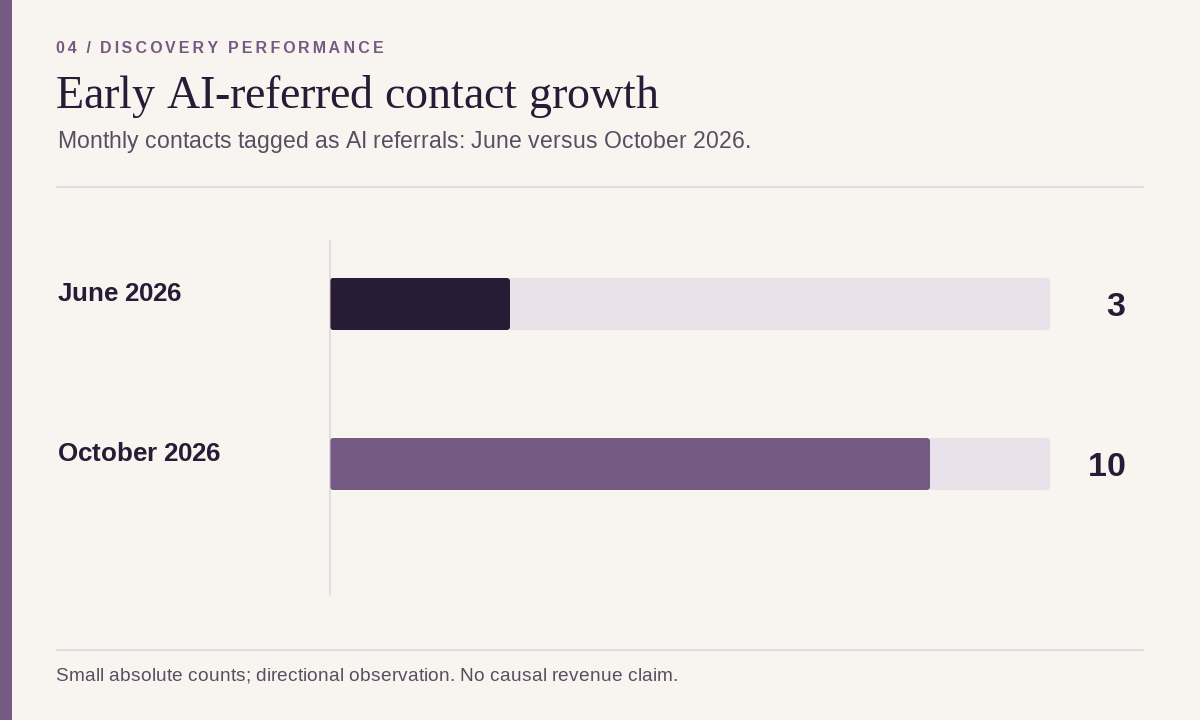
Chart data
| Group | Value |
|---|---|
| June 2026 | 3 |
| October 2026 | 10 |
Strategic takeaways
AI search is not an isolated marketing channel.
It sits at the intersection of buyer psychology, information discovery, brand authority, technical infrastructure, product positioning, and the broader digital experience.
Building an effective capability requires understanding the mechanisms, developing research loops, and adapting tactics as evidence evolves.
The thinking behind the work

Buyer Behavior · SEO · AI Search
Behavioral Foundations of Modern Search
How human motivation shapes discovery, how AI introduces an additional layer of interpretation, and why modern search strategy requires understanding both the buyer and the systems mediating the buyer's decisions.
Read the framework

Next case study
Product marketing
Creating Coherence Across a Complex Product Portfolio
Connecting buyer language, product positioning and consistent digital representation.