Web Strategy & Digital Architecture
Architecting a Complex Digital Ecosystem
Balancing buyer experience, brand equity, technical infrastructure, measurement, compliance, and discovery across a complex multi-product digital ecosystem.
- 13 web properties
- Four-month rebuild / 20+ workstreams
- Six property decisions
At a glance
- Organization
- OPSWAT
- My role
- Web strategy owner and cross-functional architecture advisor
- Scope
- 13 web properties
- Selected initiatives
- Four-month website rebuild, 20+ workstreams, six web property decisions
- Implementation status
- Completed rebuild and ongoing ecosystem strategy
Executive summary
A company's digital ecosystem is not simply a collection of websites.
Decisions about domains, navigation, information architecture, documentation, product experiences, and measurement influence how buyers understand the organization and how effectively marketing and product teams operate.
I developed a strategic approach to evaluating these decisions across multiple business and technical requirements.
The challenge
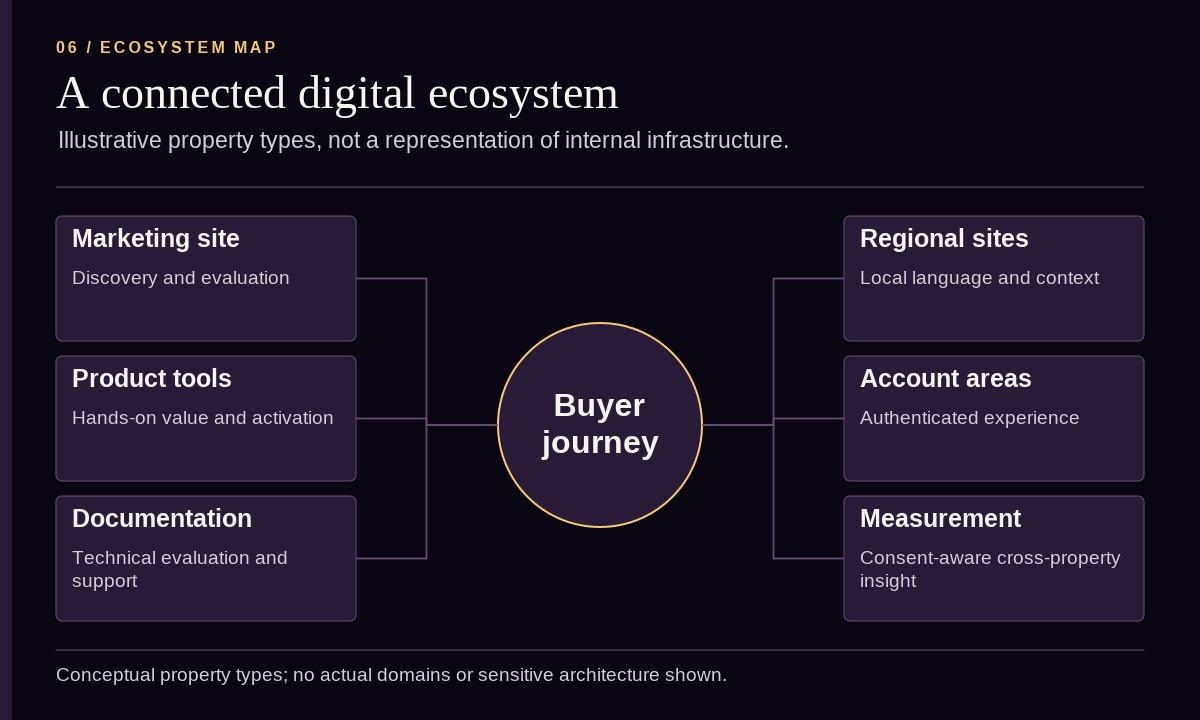
A growing technology portfolio creates competing needs.
Individual products may require specialized experiences. Regional teams need localization flexibility. Product organizations need documentation and customer-facing resources. Marketing needs coherent brand representation, reliable attribution, and discoverability.
Optimizing any one of these requirements in isolation can introduce problems elsewhere.
The architecture decision framework
I developed a repeatable approach to evaluating web property decisions across six dimensions:
- Buyer journey and experience
- Brand and product relationships
- Search visibility and entity coherence
- Measurement and attribution
- Localization and operational scalability
- Privacy, compliance, and technical requirements
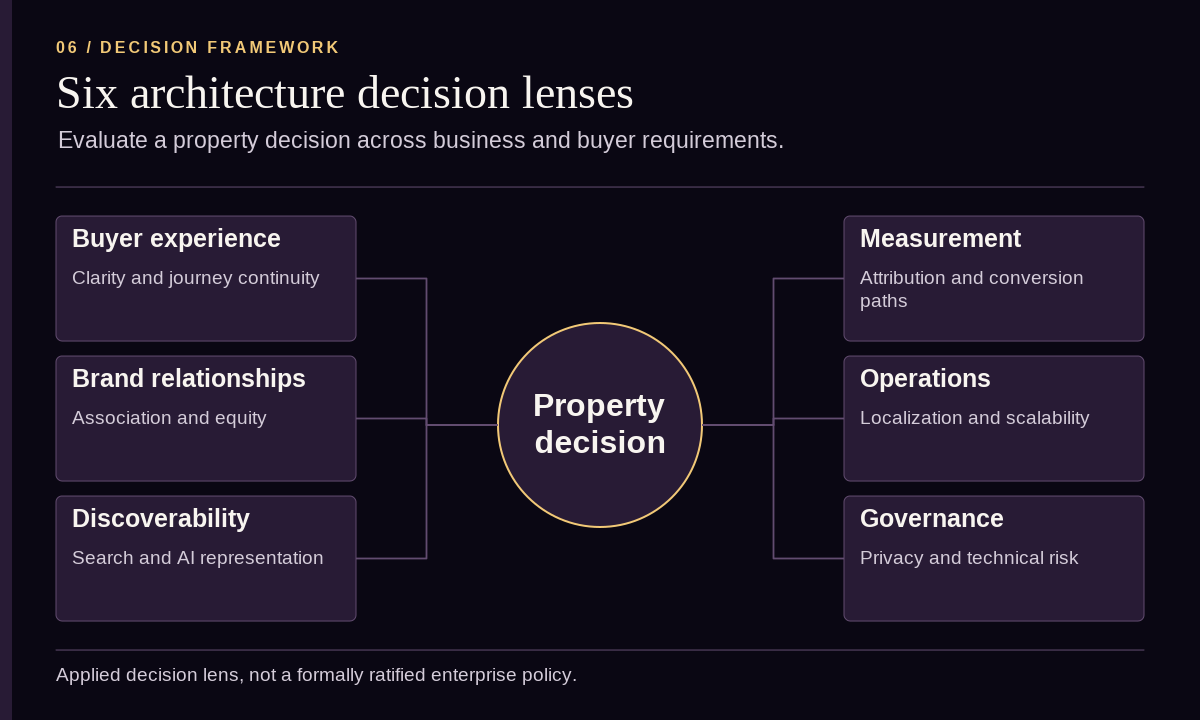
The framework supported evaluation of six property decisions and helped distinguish when consolidation, separation, or stronger cross-property integration was appropriate.
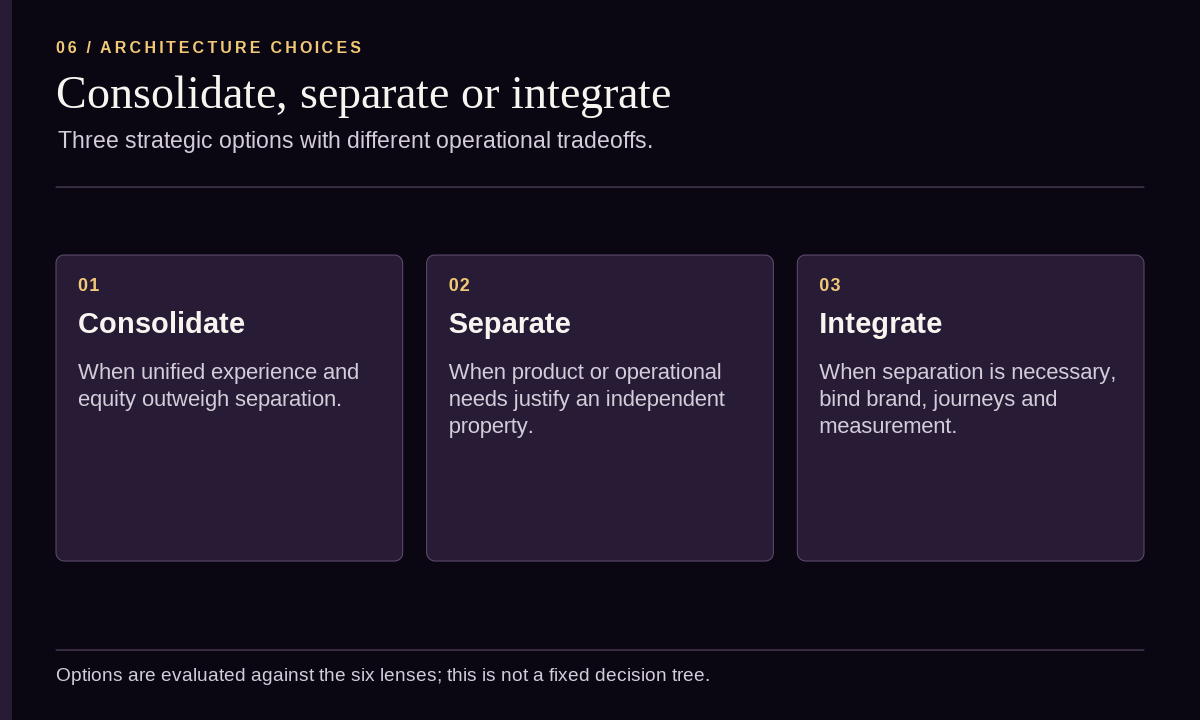
Not every recommendation was adopted. The framework also supported mitigation strategies where organizational decisions differed from the recommended approach.
Website transformation
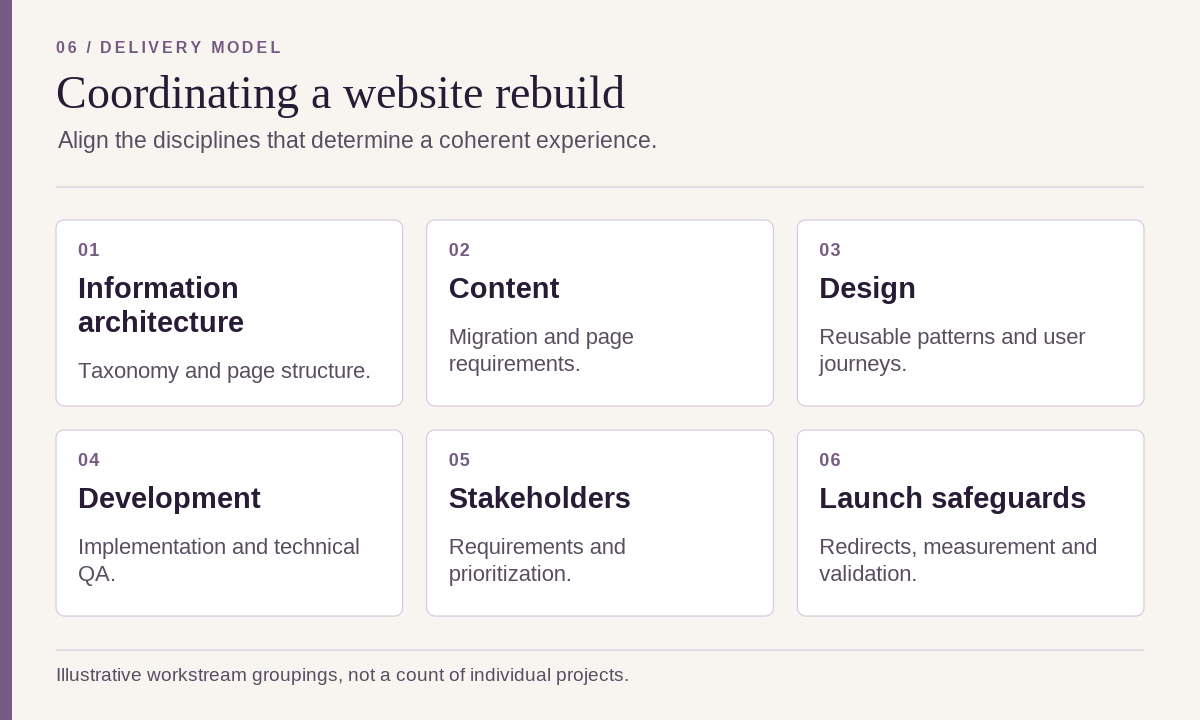
I led information architecture and cross-functional delivery for a four-month website rebuild involving more than 20 workstreams.
The initiative required coordinating content, design, development, stakeholder priorities, and structural decisions across the digital portfolio.
I also developed website standards and migration safeguards to support subsequent architecture and navigation changes.
Extending the digital experience
My work extended beyond marketing pages into documentation discovery, product experiences, regional infrastructure, and free-tool journeys.
This included research and recommendations intended to strengthen the relationship between marketing acquisition and downstream digital experiences.
Outcomes
The website rebuild was delivered, and architecture decision-making became a more structured component of ongoing digital strategy.
The framework informed property evaluations, integration recommendations, and mitigation strategies.
These initiatives established a stronger foundation for evaluating digital architecture through business and buyer requirements rather than individual stakeholder preferences alone.
Strategic takeaways
A digital ecosystem must be evaluated as a connected business system.
Architecture decisions should account for their effects on buyer understanding, brand relationships, acquisition, measurement, operational requirements, and future scalability.
The thinking behind the work

Digital Strategy
The Website as a Growth System
A model for connecting acquisition, evaluation, conversion, activation, and commercial measurement rather than treating the website as a collection of independent pages.
Read the framework
Architecture
Digital Ecosystem Decision Framework
A decision model for evaluating digital architecture across buyer experience, brand relationships, discovery, attribution, operational scalability, and compliance.
Read the framework
Next case study
Investment & operations
Transforming the Marketing Operating Model
Rebalancing people, technology, external support and accountability.