Investment & Organizational Transformation
Transforming the Marketing Operating Model
Reassessing the relationship between external agencies, internal expertise, marketing technology, and AI-enabled operations to build a more scalable digital growth capability.
- Four SEO agency relationships ended
- Three team members hired
- Five AI workflows adopted across functions

At a glance
- Organization
- OPSWAT
- My role
- Functional leader and investment owner
- Scope
- Team development, agency relationships, marketing technology, operational governance
- Implementation status
- Restructuring decisions implemented; operating model continues to evolve
Executive summary
Building a marketing function requires continually evaluating whether its operating model supports its strategic objectives.
As the search program matured, I identified an opportunity to change how capabilities were resourced and delivered.
The objective was to create stronger internal ownership of strategic knowledge, quality control, measurement, and execution.
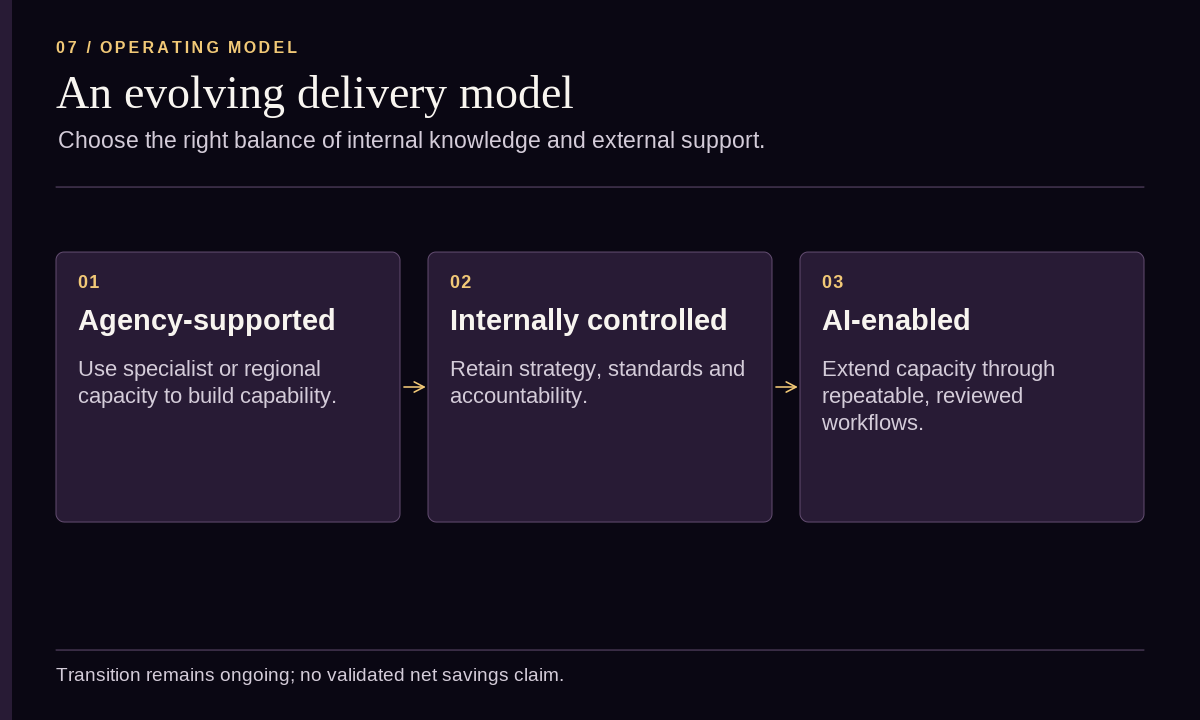
Reassessing agency investment
External agencies initially supported the development of regional and specialist search capabilities.
Over time, performance evaluation raised concerns about whether the agency model was delivering sufficient strategic and operational value.
I terminated four SEO agency relationships and recommended shifting toward a more internally controlled delivery model supported by technology and AI.
The decision reflected an assessment of capability, accountability, scalability, and strategic control rather than cost reduction alone.
Developing internal expertise
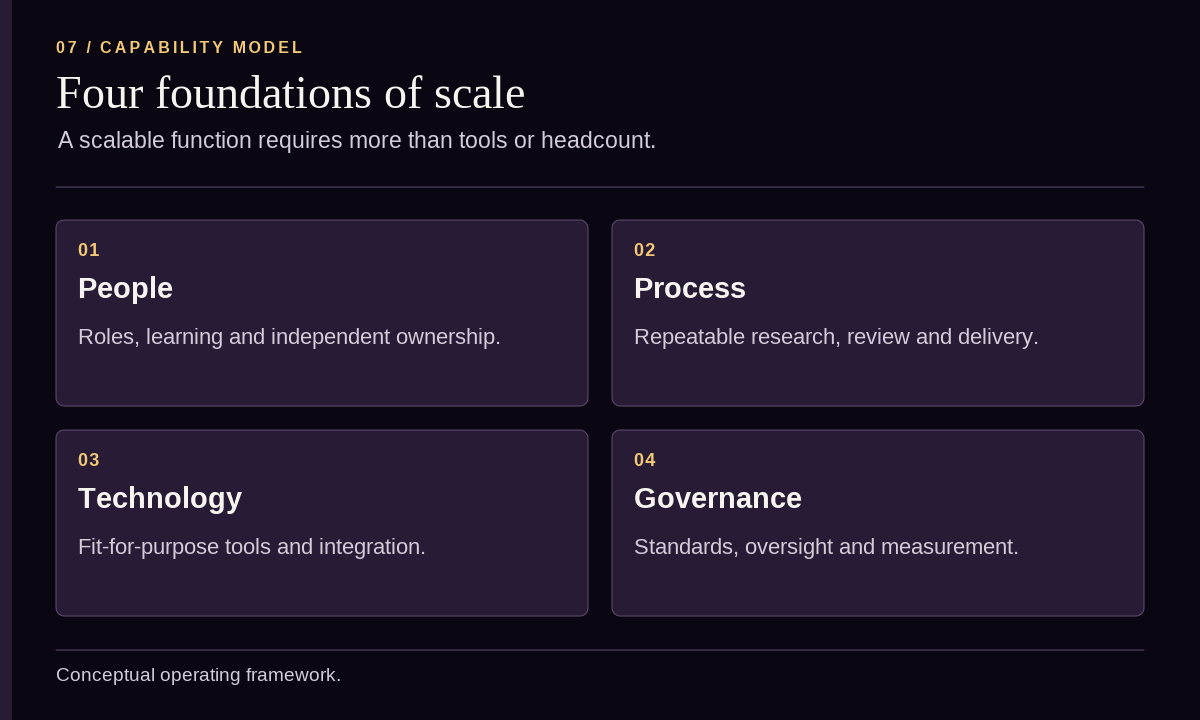
I defined team roles, hired and trained internal resources, and progressively expanded their responsibilities.
Operational ownership included technical SEO monitoring, developer coordination, stakeholder delivery, and AI-enabled content processes.
My role increasingly focused on strategic direction, prioritization, technology investment, and cross-functional alignment.
Operationalizing AI
I developed five AI-enabled workflows adopted across Brand, Content, and Digital Marketing.
These workflows supported research, content development, optimization, and repeatable marketing operations.
The objective was to integrate AI into established processes while retaining human oversight, strategic judgment, and factual accuracy.
Building the technology foundation
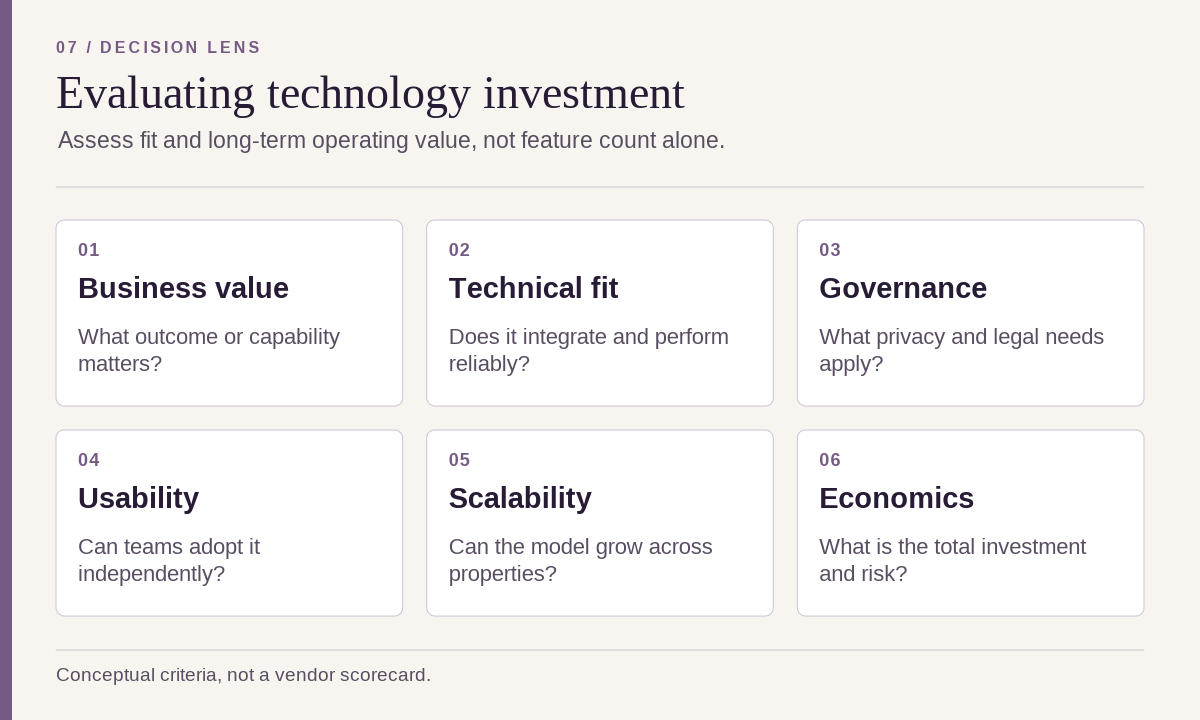
I owned technology evaluation, vendor selection, contract negotiation, and implementation requirements across relevant marketing capabilities.
Technology decisions were coordinated with IT, Legal, Engineering, and other stakeholders to address enterprise requirements.
The evaluation process considered business value, technical fit, integration, governance, operational reliability, and scalability.
Outcomes
The function shifted toward greater internal ownership of strategy, execution, and operational knowledge.
Team responsibilities expanded, external agency relationships were restructured, and AI-enabled processes were adopted across multiple marketing functions.
No validated net cost savings figure is claimed.
Strategic takeaways
A scalable operating model is not simply a question of hiring more people or purchasing more technology.
It requires making deliberate choices about where expertise should reside, which capabilities should be internal, how technology can extend capacity, and how the organization will maintain accountability.

Next case study
Integrated digital marketing
Making Federal Innovation Discoverable
Building integrated digital marketing and scalable technology discovery.